
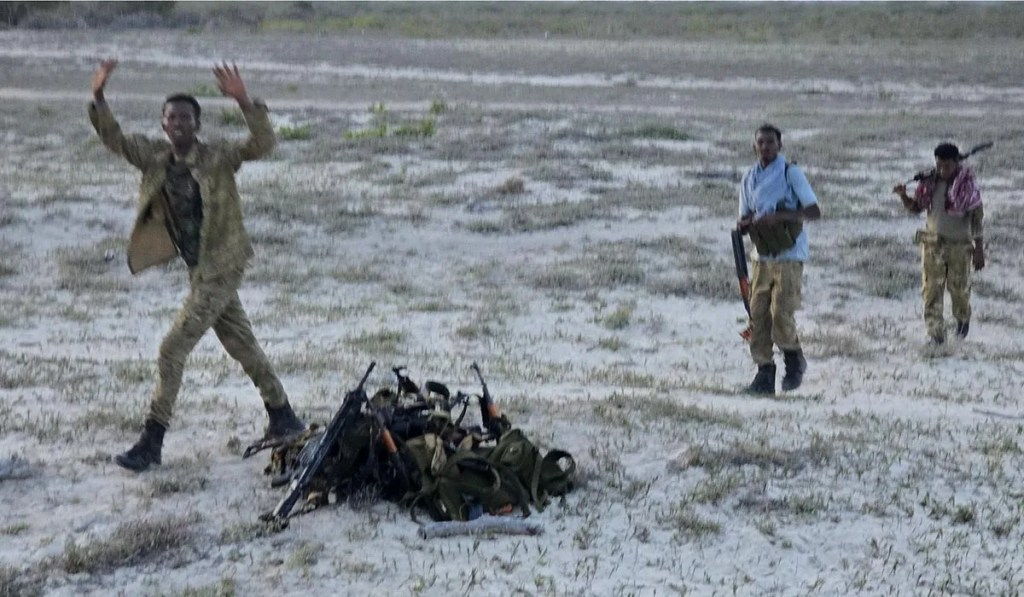
On the same day that Jubaland regional forces summarily defeated forces from the Federal Government of Somalia (FGS) near Raas Kambooni, Turkey announced that Ethiopia and the FGS signed the Ankara Declaration to ease tensions between the two nations stemming from Addis Ababa’s controversial MOU with Somaliland where it would lease port access in exchange for recognition as an independent country.
Here are four takeaways from the two events that dominated east African news coverage on December 11.
#1: The SNA’s defeat is an embarassing scandal that is an indictment on the basic warfighting capabilities of the SNA.
- Hundreds of SNA troops either surrendered to Jubaland forces or the Kenyan military across the border.
- The FGS’ failure to develop a concept of operations that effectively aligns troops, resources, and a scheme of maneuver to defeat a moderately capable adversary in Jubaland underscores how the government cannot defeat al-Shabaab without local forces and international partners.
- Somalia’s relatively young Chief of Defence, General Odowaa Yusuf Rageh, is in his second stint in the job and has not shown he is capable of implementing military doctrine associated with counterinsurgency, particularly with a career focused on VIP protection rather than combat experience.
#2: Media Coverage of the Ankara Declaration saved Hassan Sheikh from the brunt of an embarassing military defeat.
- It is incredibly fortunate for Hassan Sheikh that round-the-clock negotiations with PM Abiy resulted in an agreement that arguably overshadowed one of the worst security failures of his second tenure in office.
- The Ankara Declaration drew significant media attention away from the SNA defeat in Jubaland because it addressed two perennial hot button issues: the future of Ethiopia’s troops in Somalia and Somalia’s attempts to counter Somaliland’s efforts to achieve recognition as an independent country.
- The agreement establishes political space for Ethiopian troops to remain in Somalia and sets up negotiations for port access outside of the Somaliland MOU.
#3: Ethiopia Wins Big as It Hedges in Somalia — At Its Own Risk.
- As a result of the Ankara Declaration, Somalia is set to drop its objection to Ethiopia’s participation in the peacekeeping mission that will take over for ATMIS, providing a much needed capability for a force that will have fewer resources and a smaller footprint.
- If Ethiopia becomes a troop contributing country to AUSSOM, it will once again get the international community to subsidize its forces to deploy to Somalia to accomplish its own strategic security interests.
- If the negotiations with the FGS for a sovereign base in Somalia break down, Ethiopia can still pursue the MOU with Somaliland, although Addis would still have to deal with the punitive actions the FGS would take in that scenario.
#4: Ethiopia Needs To Negotiate With All the Right Stakeholders
- Ethiopia is focused on securing a port for a naval base on the Red Sea as opposed to a commercial hub because it already has a robust infrastructure for importing goods through Djibouti via railway, which is cheaper, more efficient, and secure than building a commercial hub from scratch on any part of the Somali coast.
- Puntland is the only region apart from Somaliland that can offer a Red Sea port, and it has discussed joint maritime infrastructure projects with Ethiopia in the past.
- As a result, Ethiopia may need to find a way to bring Puntland into negotiations with the FGS, which will be extremely difficult due to its ongoing refusal to cooperate with the Somali government.
#5: Somaliland Has An Alternative Pathway
- There is no guarantee that Ethiopia will succeed in working out a deal for a naval base with the FGS, and Somaliland will be ready to re-visit implementation of the MOU in the future.
- As a potential alternative win, there is speculation that US president-elect Donald Trump’s administration could inevitably recognize Somaliland. Trump’s administration could seek its own access to a port in Somaliland, even as it has a large base in Djibouti, simply given Trump’s transactional approach to foreign policy.
- US recognition in a Trump administration could be reversed by a future president. However, while in effect, it would drive a wedge between the US and the FGS and likely be part of a reduction in assistance during Trump’s second term as a continuation of cuts he made during his first stint in office — all of which would serve Somaliland’s objectives.
Discover more from
Subscribe to get the latest posts sent to your email.
Categories: Ethiopia, Int'l Community in Somalia, Jubaland
 Mohamud’s U.S. Visit Foreshadows Federalism Debate
  Jubaland Close to Becoming Somalia’s Next State
  somalianewsroom.com
Leave a comment